
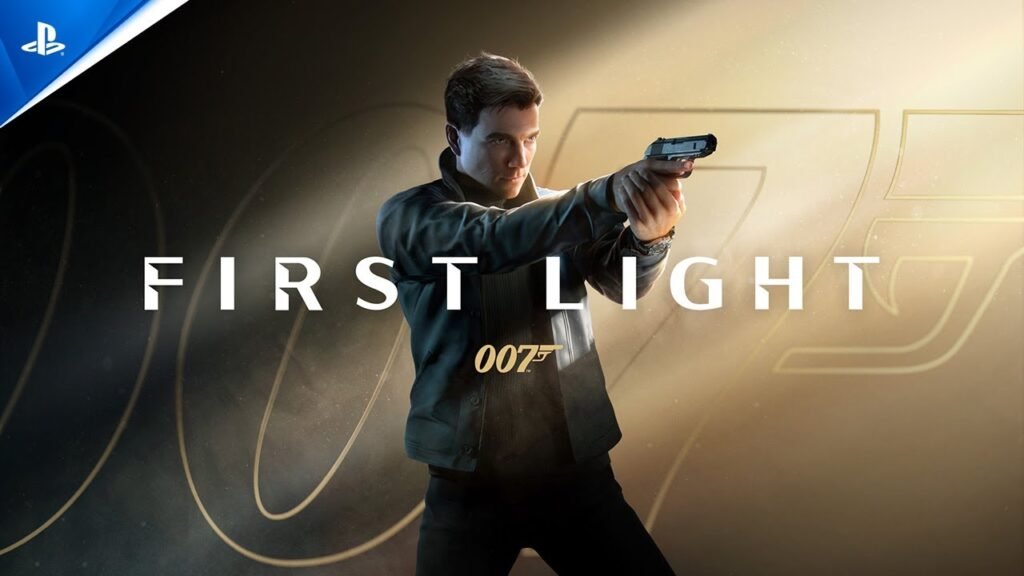
Nine out of ten gamers roaming The Game Awards floor agree: IO Interactive is the right studio to take on a big-budget James Bond game. After all, the Hitman developer has the pedigree.
For 25 years, IO has refined the Hitman series into the gold standard of action-stealth, constantly reinventing its formula. But adapting 007 for the modern console era comes with serious stakes. The studio must step out from the long shadow of GoldenEye, honor the legacy of Daniel Craig’s Bond, and reinvent a 72-year-old icon—without simply reskinning Agent 47. Diamonds may be forever, but winning streaks rarely are.
According to Martin Emborg, cinematic and narrative director on 007 First Light, IO has found the answer by deliberately avoiding Bond’s well-worn past. Rather than retelling familiar movie moments, First Light is a prequel that follows a 26-year-old James Bond who has just earned his license to kill.
Portrayed by Patrick Gibson (Dexter: Resurrection, The OA), this version of Bond is raw, impulsive, and still discovering who he is meant to be. Easter eggs will reward longtime fans, but the focus is firmly on reinvention.
“First Light is about a young man looking for purpose who finds destiny,” Emborg said.
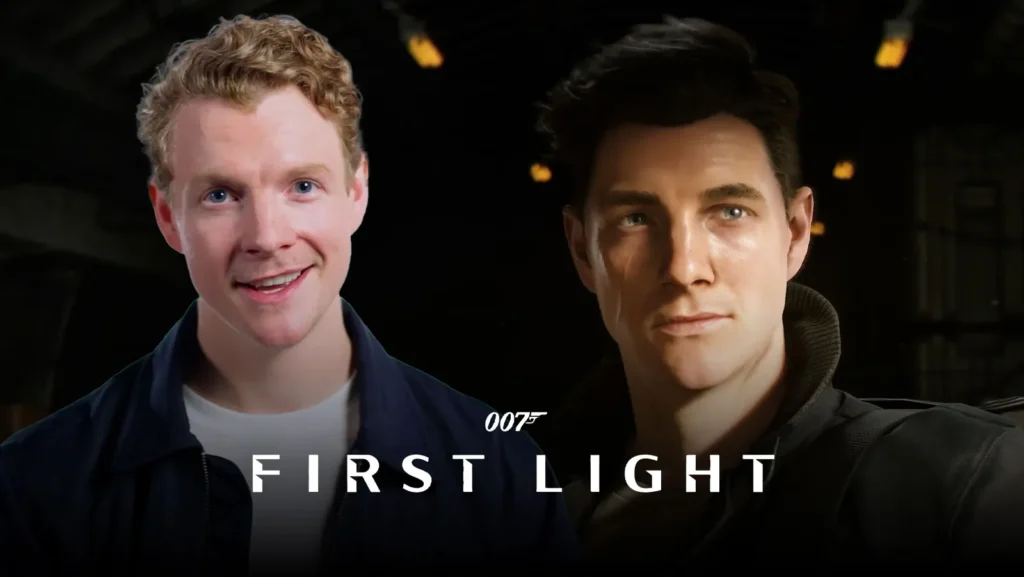
Patrick Gibson in 007: First Light
As Emborg explained to Polygon at a preview event just hours before the 2025 Game Awards, the origin-story framework allows IO Interactive to remain faithful to Bond’s essential traits—charm, intelligence, and irreverence—while reexamining them through a modern lens. Traditionally, Bond has not been a character defined by introspection. In Ian Fleming’s novels and throughout the pre–Daniel Craig film era, from Sean Connery to Pierce Brosnan, Bond was aspirational first and psychological second: a man who navigated danger with near-mythic confidence.
Craig’s tenure fractured that image, emphasizing vulnerability and the physical cost of life in MI6. 007 First Light appears to inherit that instinct while pushing even further back in the timeline, exploring who Bond was before the confidence calcified.
Emborg describes this incarnation of Bond as someone “kind of stumbling into this world,” a stark contrast to the polished operative audiences know. The game follows Bond before and during his entry into MI6, where he is mentored by John Greenway, the agent overseeing the 00 program, portrayed by The Walking Dead’s Lennie James. That mentorship creates space to explore how Bond learns the rules—and, crucially, how he begins to break them.
Emborg draws a sharp distinction between earlier versions of the character and Patrick Gibson’s portrayal. When a fully formed Bond leaps from a plane, it’s a calculated risk. When First Light’s Bond does it, Emborg says, it’s more like: “That’s how I’m going to get these guys—I’m just going to jump out of the new fucking airplane.”
That reckless flirtation with invincibility defines 007 First Light’s take on James Bond.
Emborg speaks warmly of Gibson—casually referring to him as “Patty”—and emphasizes the balance he brings to the role. According to Emborg, Gibson combines “a great intensity” with “a great sense of wit and charm,” resulting in a Bond who can be genuinely funny in one moment and sharply focused the next. The character may still be taking shape, but IO wasn’t about to miss the opportunity to arm its Bond with perfectly timed one-liners.
While 007 First Light isn’t directly adapted from any of Ian Fleming’s novels, Emborg hopes IO’s rough-edged yet brutal take on a “young Bond” stays true to the author’s original vision. In a 1965 interview with Playboy, Sean Connery distilled the enduring question of what makes Bond Bond—a set of qualities that have earned the character both admiration as a masculine ideal and criticism for toxic behavior—into a remarkably elegant observation:
“He is really a mixture of all that the defenders and the attackers say he is,” Connery said. When discussing Bond with Ian Fleming, Connery recalled that the character was conceived as “a very simple, straightforward, blunt instrument of the police force”—a functionary who carried out his work doggedly. At the same time, Bond possessed idiosyncrasies that could read as snobbish, including a taste for fine wine and other luxuries.
But placed in the extraordinary situations Bond routinely inhabits, Connery argued, those indulgences made sense. “It is a very hard, high, unusual league that he plays in,” he said. “Therefore he is quite right in having all his senses satisfied… be it sex, wine, food or clothes.”
That framing maps cleanly onto 007 First Light’s interpretation of Bond: a young man thrust into an extreme world before he’s fully prepared for it, compensating with bravado, instinct, and appetite. IO Interactive’s take doesn’t strip Bond of his excesses—it contextualizes them, showing how indulgence, recklessness, and charm emerge as survival mechanisms rather than affectations. In doing so, First Light positions itself not as a rejection of classic Bond, but as an origin story for why that Bond exists at all.
In Emborg’s view, Bond is a “physical, visceral guy,” shaped by experience and violence rather than floating above them. Looking backward through Bond’s past also gave IO Interactive room to contemporize the character’s values. 007 First Light is set in the modern day, and while Emborg stops short of bluntly saying “this Bond doesn’t do sex,” the game clearly steps away from the unchecked womanizing of the swinging ’60s. In its place is the fight-to-the-death intensity that defined Connery’s brutal train brawl in From Russia with Love and Craig’s stairwell showdown in Casino Royale. As for Bond’s preferred martini, Emborg only smiles and says to wait and see.
The shadow of Hitman inevitably looms over First Light. IO’s reputation for systemic, sandbox-driven design makes Bond a natural fit on paper, but Emborg is careful to underline the distinction between Agent 47 and Agent 007. “Hitman is calculated,” he says. “Bond is much more improvisational. What can we do? It’s chaos—in the best way.”
That philosophy appears to define the game’s approach to play. Bond isn’t executing flawless plans so much as adapting on the fly when everything goes wrong. 007 First Light seems less interested in perfection than momentum, inviting players to inhabit a Bond who acts first—and figures out the solution afterward.

For all the careful analysis of Bond’s psychology, Emborg is quick to stress that 007 First Light shares the same core goal IO Interactive CEO Hakan Abrak often cites when talking about the future of Hitman: fantasy and fun. The game may ask big questions—“What is the psychological makeup of this guy?” as Emborg puts it—but at its heart, First Light is still about giving players the thrill of being James Bond.
Whether that interpretation ultimately rings true will be decided by players, not press previews. Still, IO’s approach reflects a quiet confidence that Bond can evolve without losing his essence. For a spy defined by reinvention, it’s a fitting—and faithful—gamble.
007 First Light arrives on PC, PS5, and Xbox on March 27, 2026.